"Yes, Chef": How the Brigade System Illuminates Organizational Design for an AI-Ready World
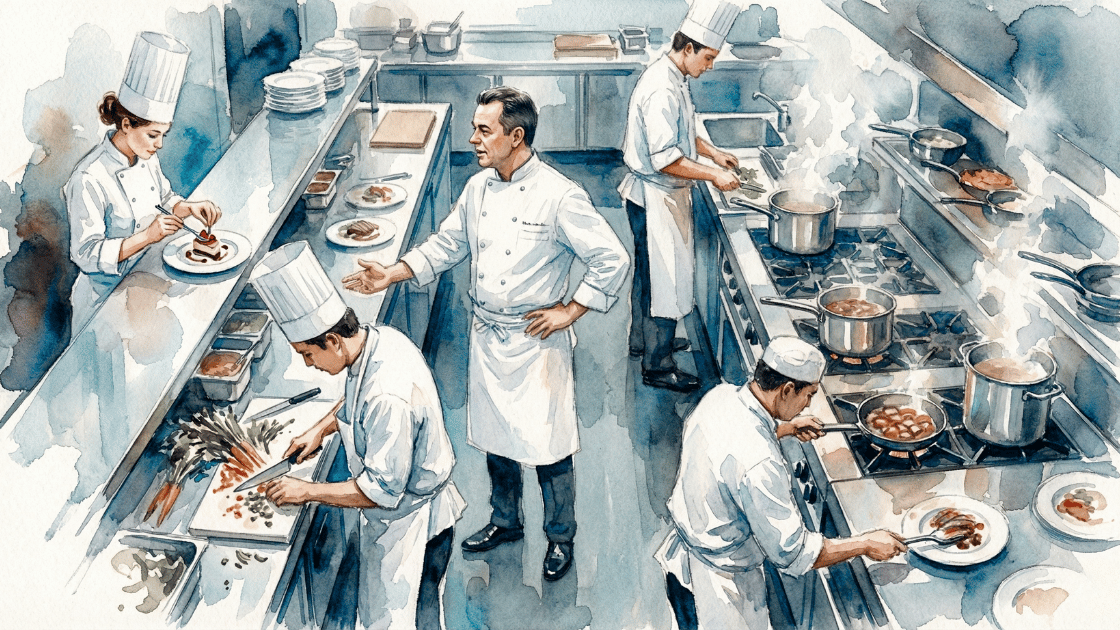
This article examines how the Brigade de Cuisine, a 140-year-old organisational model developed by Georges-Auguste Escoffier for professional kitchens, offers a blueprint for modern organisations navigating the AI era. The Brigade system solves a paradox that plagues most organisations: how to be both disciplined and adaptive, both structured and innovative. The article argues that the Brigade achieves this through three mechanisms: specialisation creates mastery (enabling people to work with AI, not against it ), clear communication prevents cascading failures (essential for AI integration), and built-in redundancy creates resilience (through cross-training, not wasteful duplication). The Brigade is analysed through the Forest-Orchard Resilience System (FORS) framework, demonstrating how its "Orchard" elements (hierarchy, defined roles, standards) enable its "Forest" elements (autonomy, adaptation, emergence). The article uses FX's TV show The Bear to illustrate how chaotic organisations transform when Brigade principles are applied. Five practical lessons are offered for senior leaders: clarify organisational architecture, invest in deep expertise within clear domains, create explicit coordination mechanisms, build adaptive capacity through cross-training, and lead with vision and trust.
Author: Dawn Springett, Changentum